
Methodology
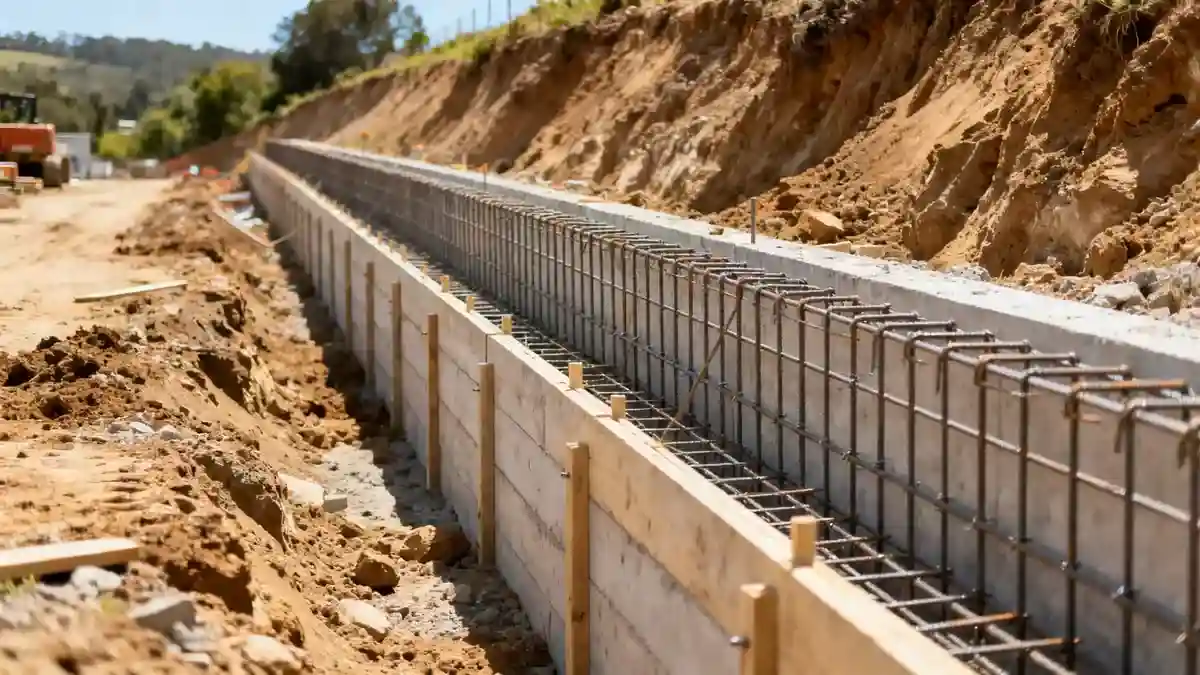
Our retaining wall design methodology follows a systematic approach aligned with NZS 1170.5 and Eurocode 7. We begin with a site investigation including boreholes to depths of at least 3 m below the base of the wall, using SPT and hand auger techniques. Soil samples are tested in our soil mechanics laboratory for shear strength parameters (cohesion, friction angle) and unit weight. Using these parameters, we perform limit equilibrium analyses for overturning, sliding, bearing capacity, and global stability. For seismic conditions, we apply pseudo-static analysis with a horizontal seismic coefficient of 0.1 to 0.4 depending on the site's hazard factor Z. Drainage design is integrated to prevent hydrostatic pressure buildup. All designs are peer-reviewed and stamped by a Chartered Professional Engineer.
Reference Technical Parameters
| Parameter | Reference Value |
|---|---|
| Wall Height | 1.0 m – 8.0 m |
| Soil Friction Angle (φ') | 25° – 40° |
| Cohesion (c') | 0 – 20 kPa |
| Seismic Coefficient (kh) | 0.1 – 0.4 |
| Factor of Safety (static) | 1.5 – 2.0 |
Local Considerations — New Zealand
New Zealand's varied geology requires adaptable retaining wall designs. In Auckland, soft volcanic soils and high water tables necessitate deep drainage and reinforced concrete walls. Christchurch's liquefiable silty sands demand ground improvement and flexible wall systems like crib walls. In Wellington, steep terrain and high seismicity call for anchored or tied-back walls with robust seismic detailing. Our team has extensive experience across these regions, including Blenheim, Dunedin, Hamilton, Hastings, and Tauranga. We tailor each design to local soil conditions and seismic hazard, ensuring compliance with NZS 1170.5 and local council requirements. For projects in Blenheim, we apply specific knowledge of the Wairau Valley alluvial deposits.
Request a Quote
Our team reviews your project and issues an initial report at no cost.
Or write us directly at [email protected]
Applicable Standards
- NZS 1170.5:2004 – Structural Design Actions – Earthquake actions
- NZS 3101:2006 – Concrete Structures Standard
- Eurocode 7 – Geotechnical Design (adopted as NZS EN 1997)
- ASTM D1586 – Standard Test Method for SPT
Frequently Asked Questions
What are the typical soil tests required for retaining wall design?
We perform standard penetration tests (SPT) to obtain N-values, shear box or triaxial tests for strength parameters, and moisture content/density tests. For cohesive soils, we also conduct Atterberg limits. All tests follow ASTM and NZ standards. The number of test points depends on wall length and soil variability.
How does seismic design affect retaining wall design in New Zealand?
Seismic design is critical. We apply NZS 1170.5 to determine the horizontal seismic coefficient based on site hazard factor Z and soil class. For critical walls, we perform pseudo-static analysis with a coefficient up to 0.4. Additional reinforcement and drainage are incorporated to prevent failure during earthquakes.
What is the typical timeline for a retaining wall design project?
For a standard residential wall (up to 3 m high), the design phase takes 2-4 weeks, including site investigation, laboratory testing, analysis, and reporting. Larger or complex projects may require 6-8 weeks. Expedited services are available for urgent projects.
How much does retaining wall design cost in New Zealand?
Costs vary based on wall height, soil conditions, and site access. For a typical residential wall, our design fee ranges from $1,750 to $7,000. This includes site investigation, lab testing, engineering analysis, and a stamped design report. We recommend contacting us for a tailored quote.