Methodology

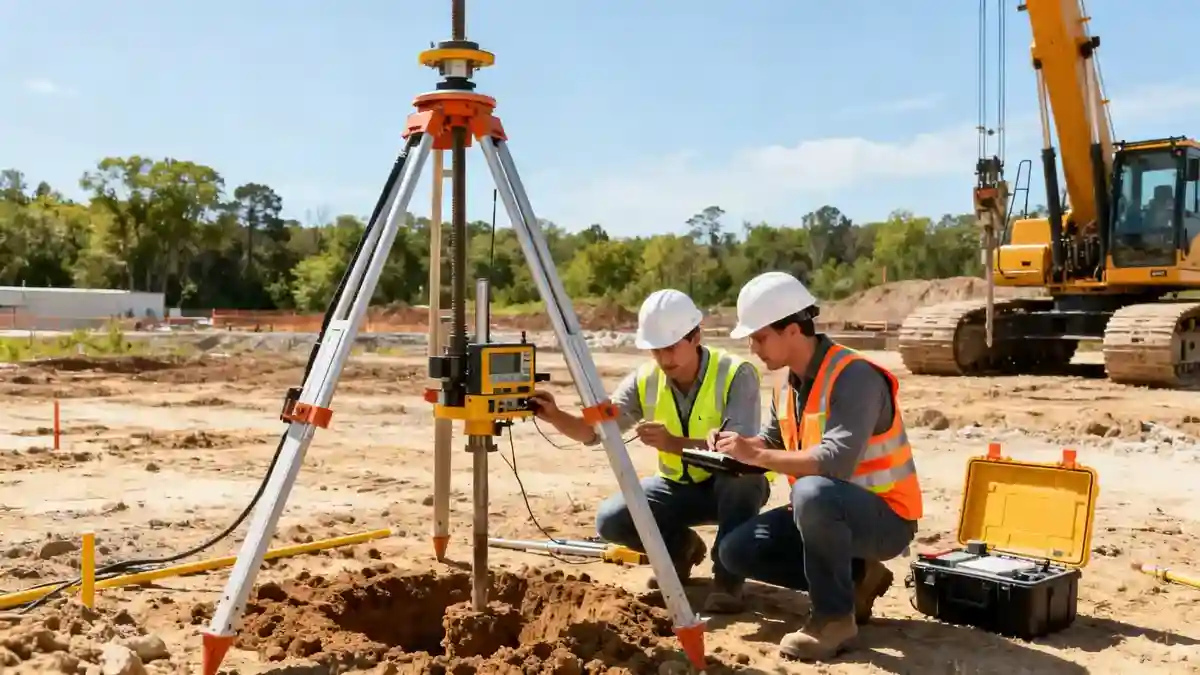
Our methodology follows NZGS guidelines and Eurocode 7 principles. We begin with a desktop study and site reconnaissance, then perform subsurface exploration using SPT boring and undisturbed sampling. Soil samples are tested in our laboratory for shear strength parameters through triaxial and direct shear tests (ASTM D3080). Numerical modeling using limit equilibrium and finite element methods (e.g., Slide, Plaxis) calculates factor of safety for various failure surfaces. For critical slopes, we install inclinometers and piezometers for long-term monitoring. All analyses incorporate seismic loading per NZS 1170.5, with peak ground accelerations up to 0.4g in high-seismic zones like Wellington. For detailed laboratory testing, see our Soil Mechanics Laboratory services.
Reference Technical Parameters
| Parameter | Reference Value |
|---|---|
| Shear Strength (c') | 0–50 kPa |
| Internal Friction Angle (φ') | 20°–40° |
| Unit Weight (γ) | 16–22 kN/m³ |
| Factor of Safety (Static) | 1.5 (minimum) |
| Factor of Safety (Seismic) | 1.1–1.2 (minimum) |
Local Considerations — New Zealand
Slope stability conditions vary significantly across New Zealand. In the North Island, volcanic soils in Auckland and Tauranga present unique failure mechanisms, while the soft alluvial deposits of Hamilton require deep drainage solutions. In the South Island, the schist bedrock of Dunedin and the loess soils of Christchurch demand specific analysis techniques. Our team adapts each assessment to local geology and seismic zones—for example, using higher safety factors in Wellington (Zone 4) versus Auckland (Zone 2). We maintain regional offices to provide site-specific expertise. For tailored solutions in Christchurch, our engineers understand the post-earthquake ground conditions intimately.
Request a Quote
Our team reviews your project and issues an initial report at no cost.
Or write us directly at [email protected]
Applicable Standards
- NZS 1170.5:2004 Structural Design Actions – Earthquake Actions
- NZGS 2005 Field Description of Soil and Rock
- Eurocode 7 (EN 1997-1) Geotechnical Design
- ASTM D3080/D3080M Direct Shear Test of Soils
Frequently Asked Questions
What methods are used for slope stability analysis?
We use limit equilibrium methods (Bishop, Janbu, Spencer) and finite element analysis to calculate factor of safety. For complex cases, we perform probabilistic analysis to account for uncertainties in soil parameters.
How long does a typical slope stability assessment take?
A standard assessment for a single slope takes 2–4 weeks, including field work, lab testing, and modeling. Larger or multi-slope projects may require 6–8 weeks. Urgent assessments can be expedited.
What standards govern slope stability in New Zealand?
Key standards include NZS 1170.5 for seismic loading, NZGS guidelines for soil description, and Eurocode 7 for geotechnical design. Local council requirements also apply, particularly in landslide-prone areas.
How much does slope stability analysis cost in New Zealand?
Costs range from $2,100 to $7,000 depending on slope complexity, site accessibility, number of boreholes, and laboratory tests. This includes field investigation, testing, modeling, and a detailed report. Contact us for a specific quote.